Time to Ban Commercial Hunting
Commercial hunting reveals the true face of Polish hunting: not “public-interest game management”, not “tradition”, not “active nature conservation”, but a market in which wild animals become a service and a trophy. To buy the experience of killing, one does not have to be a member of a local hunting club — it is enough to pay. But over this segment of the market, the State has retained only the appearance of control.
In a Polish forest, one can buy the experience of killing. One does not have to be a member of a local hunting club, have any connection to the place, or bear the consequences of what later happens to the local natural environment. It is enough to pay. This is how the system of commercial hunting works: a business hidden behind the language of “game management”, “hunting services” and “Game Breeding Centres”. The State has handed wild animals over to a system that allows money to be made from killing them, and then pretends that this is merely tradition.
This is not a margin of the system. These are not a few exceptional hunts for trophy collectors. This is a network of companies, State Forests units, Game Breeding Centres and local hunting clubs which together create a market in killing. A market all the more convenient because it is hidden under the state umbrella of “game management”.
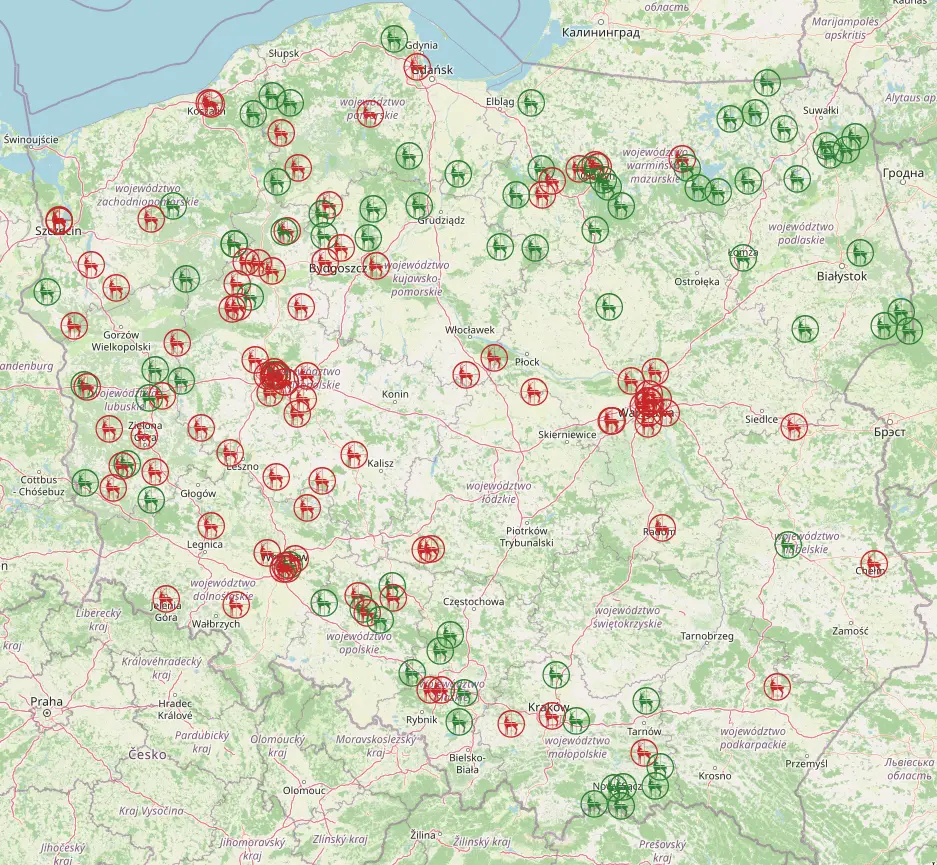
This is exactly what we showed in our report on commercial hunting. We managed to identify 175 entities that had notified the authorities of activities consisting in organising commercial hunts. Of these, 98 are companies or sole proprietorships, and 77 are organisational units of the State Forests. In addition, there are more than 160 Game Breeding Centres — places which, in principle, were supposed to serve special purposes of game management, but in practice often provide the infrastructure for commercial hunting. What is most striking, however, is not only how many such entities we managed to find. More troubling is the fact that the State cannot be certain whether this is the complete list.
If someone organises school trips, pilgrimages or ordinary package tours, the State requires entry in a register, insurance guarantees and contributions to a tourism fund. But if someone sells tourists the opportunity to kill wild animals, these requirements suddenly cease to apply.
After successive waves of deregulation, what remains in practice of the former supervision over “hunting agencies” is an annual insurance policy sent to the voivodeship marshal. But if the entrepreneur does not come forward on their own initiative, the marshal may not even know that they are operating. Control by the State Hunting Guard over this activity is also often illusory or does not exist at all. In the Kuyavian-Pomeranian Voivodeship, the State Hunting Guard acts in an exemplary manner in this area: the marshal’s office provides a list of tourism agencies involved in hunting, and the police continuously pass on to the guards information about reported hunts involving foreigners. In the Masovian Voivodeship, however, no such inspections are carried out at all.
The existence of the “commercial hunting” market contradicts one of the basic stories hunters tell about themselves. We hear that hunting is a form of service. That hunters devote their own time and their own money to carrying out tasks entrusted to them by the State. That without them, nature would spin out of control. Commercial hunting shows something entirely different: this is not about any “public service”. There are tens of thousands of people willing to pay for the possibility of killing animals. And there are entities created to profit from that desire to kill. Public financial statements of hunting agencies operating as companies entered in the National Court Register show that they achieve average annual revenues of around PLN 2 million. The revenues of sole proprietorships are not publicly available, so the full value of this market cannot be reliably calculated. What is known, however, is that already in 2016 hunting clubs alone reported PLN 72.5 million in revenue from commercial hunts. The Polish Hunting Association has never disclosed more recent data.
In public debate, we are rightly outraged by trophy hunting in Africa or Asia. But we fail to notice that Poland itself is a place where people come for precisely this kind of experience. Not for contact with nature, not to protect it, not for nature education. They come for the opportunity to kill a wild animal.
According to data we obtained from provincial police headquarters, in 2025 there were 2,917 reported hunts in which foreigners were to take part. These data indicate that at least 12,000 foreign hunters came to Poland and shot animals here. These are only the figures resulting from official reports, and there is no certainty that they reflect the full scale of the phenomenon. This is precisely killing tourism. The client arrives, pays, shoots, takes the trophy and then returns home. The animal remains dead. The forest becomes a place where a public natural resource has been turned into private profit.
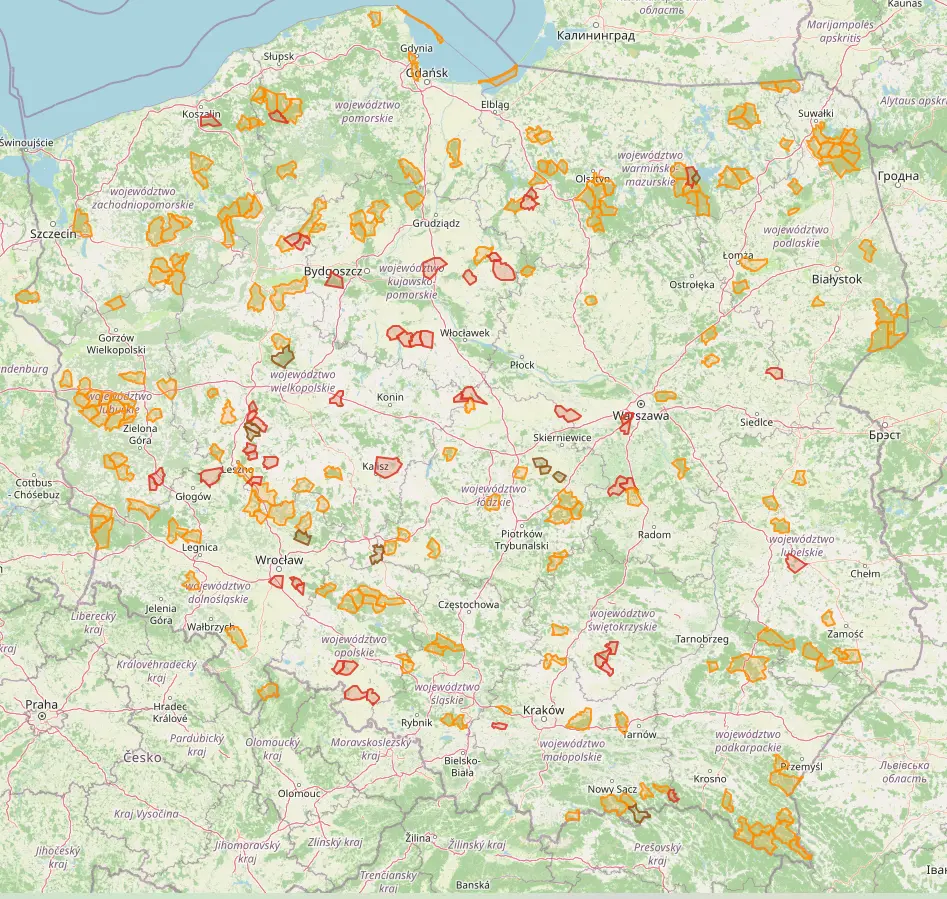
A particularly grim symbol of this system are Game Breeding Centres. The name itself sounds as if it referred to protection, research and care for animal populations. In fact, they simply function as infrastructure for commercial hunting. They are run by forest districts or by district boards or the Main Board of the Polish Hunting Association — not by local hunting clubs. Each such place has its own “hunting offer” with a price list. Some even have an online shop where one can choose the place and species of animal to be killed.
Of course, registers could be improved, obligations clarified, inspections strengthened and further reporting requirements imposed. All this would be better than the current situation, in which the State cannot even identify the full list of entities making money from commercial hunting. But in the case of hunting agencies, the problem is not only the lack of supervision. The problem lies in the very nature of this activity.
It is impossible to “regulate” ethically a market whose product is the possibility of killing a wild animal for pleasure. It is impossible to repair a system in which an animal that is part of nature, a good of the entire nation and formally the property of the State Treasury, becomes an item in a tourism offer. It is impossible to reconcile declared nature conservation with a legal business based on selling access to its destruction.
Therefore, the activities of hunting agencies should not merely be better controlled. They should be banned. There must be an end to a market in which wild animals are sold as targets to be shot. Polish forests cannot be a slaughterhouse for foreign tourists. The State should not allow a common good to be turned into private profit from killing.